Discover what makes Mexico City such an enduring source of inspiration for the design world, through the eyes of FREDERIC editor-in-chief Dara Caponigro. In this conversation, Dara shares her perspective on Mexican craftsmanship, the evolution of contemporary design and the art of collecting, along with a preview of the homes, studios and creative encounters awaiting travelers on the upcoming FREDERIC x Indagare Insider Journey to Mexico City.
As editor-in-chief of FREDERIC magazine and creative director of Schumacher, Dara Caponigro has spent decades shaping the way we think about design, interiors and the art of living well. Her distinguished career in design publishing includes leadership roles at Veranda, Domino, Elle Decor and House Beautiful, alongside a celebrated portfolio of books on decorating, collecting and personal style. Today, she brings that same discerning eye and curiosity to FREDERIC, a magazine devoted to thoughtful storytelling, exceptional craftsmanship and beauty in all its forms.
For Caponigro, understanding design means looking beyond aesthetics to the people, traditions and places that give it meaning. It is this sensibility that makes Mexico City such a compelling destination.
Travel with Indagare & FREDERIC to Mexico City: April 8 - 13, 2027. Join FREDERIC magazine's style director, Eugenia Santiesteban Soto, for exclusive access to Mexico City's leading art and design institutions—as well as private homes rarely seen by the public.
Your career has spanned some of the most influential titles in American design publishing. What has remained constant in your definition of great design journalism, and what has changed dramatically?
When I started at House Beautiful in 1986, I was a card-carrying modernist who grew up in a white cedar box, and I landed in the most decorated moment in American design. We'd arrive at a shoot with three truckloads of furniture. I learned about tole, bullion fringe, strié walls and much more on the job from amazingly talented interior designers—Mario Buatta (he used to tease me and call me Ava—said I reminded him of Ava Gardner), Mark Hampton (one of the most sophisticated men I've ever met—smart as a whip with style in spades) and David Easton (who is pegged as an over-the-top traditionalist but actually had a surprising modern side). It was the best education I ever had.
That's the constant for me. Great design journalism means keeping yourself open to different perspectives. At House Beautiful, Elle Décor, Domino and Veranda, I took those magazines' DNA and made them the best they could be, even though some of them weren't my own personal style. I started FREDERIC from scratch, and it is the first magazine that really reflects my own sensibility, which is quite broad now after being exposed to so much great design. I would say FREDERIC reflects me as a person—sophisticated but not snobby, curious, relentless in the pursuit of beauty, never trite but open to surprises.
What's changed? We don't show up with the trucks anymore and the houses we publish look like real people live in them. They have an authenticity whether they are decorated to the nines or simple cottages by the sea. The other big change is speed. So much of publishing has turned into a chase for clicks and likes, with diminishing returns. FREDERIC went the other way: good paper, considered writing, exquisite photography. It's about quality in all aspects. Even our online stories are well-written and thoughtfully produced. It turns out a lot of people are hungry for that.
Mexico City is a city of layers...For anyone who loves design, it's like reading five books at once.
Why did you decide to take FREDERIC on the road, so to speak, with an Indagare trip in 2027?
Because our readers, like our editors, are curious—they care about all aspects of a well-lived life—style, culture, design—and they are discerning. For forty years I've had the privilege of walking into houses, studios and workrooms and seeing things in three dimensions: how light actually moves across a plaster wall, the weight of a linen in your hand, the smell of a workshop. Partnering with Indagare allows our readers to experience our sensibilities in real time.
Indagare understands what makes FREDERIC special (our values are very close to yours, so it makes our partnership effortless), and you know how to open doors in a way that feels personal rather than packaged, which matters a great deal to me. I'd rather see five things properly than fifty things through a bus window.
FREDERIC magazine has partnered with Indagare to create an unforgettable small-group trip into the creative heart of Mexico City, with behind-the-scenes access to the people, places and ideas shaping its design, art and culture. What appealed to you about it as a destination? What experiences are you most excited for?
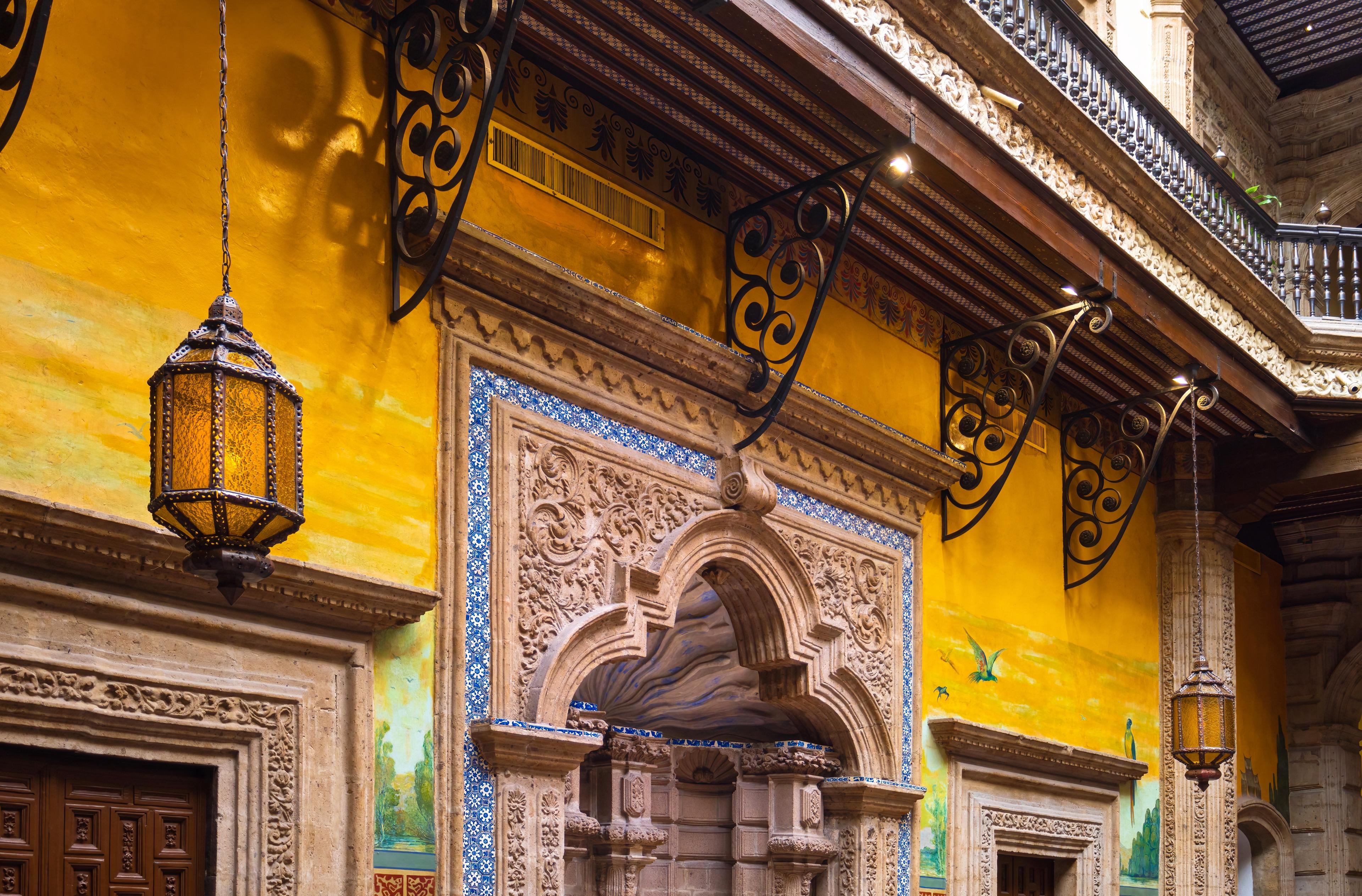
Mexico City is a city of layers. You're standing on top of Tenochtitlan in a colonial plaza, around the corner from a midcentury apartment block. For anyone who loves design, it's like reading five books at once.
Mexican modernism never tried to wipe the slate clean the way so much European and American modernism did. Luis Barragán built a house of almost monastic simplicity, then painted a dining room wall fuchsia and lined it with ceramic bowls from all over the country. Juan O'Gorman built those spare, startling functionalist studios for Diego Rivera and Frida Kahlo in the early 1930s. Clara Porset took the butaque, a low colonial lounge chair with a long Indigenous history, and made it modern without making it anonymous. The handmade and the modern grew up together there. I'm thrilled that participants will experience it with FREDERIC style director Eugenia Santiesteban Soto, who is leading the trip and has deep personal connections to Mexico. We've worked together for years; I trust her eye completely, and she has a family connection to Mexico City, so you'll see it through the eyes of someone who knows it from the inside.
The itinerary is full of things I've only seen on the page. We start at Casa Gilardi, Barragán's last house. He'd retired and turned the commission down, then changed his mind because of a jacaranda tree on the lot, so the whole house is organized around a tree. I grew up in a house my parents designed so we'd feel like we were living in the woods, so that story gets me. If the jacaranda is still blooming in April, I want to see what it does next to those purple walls.
Eugenia is equally excited to take participants into people's homes. Artist Pedro Reyes trained as an architect, and his wife Carla Fernández has spent more than two decades designing with Indigenous artisan communities; their house and studio in Coyoacán is exactly the kind of place where you see how ideas actually get made. Eugenia has also arranged for us to see a private house by Loyzaga, the studio known for classical architecture built with traditional Mexican craftsmen. Then there's the National Museum of Anthropology after hours, with the whole collection to ourselves. And Chic by Accident, Emmanuel Picault's gallery of Mexican modernism and folk art—put me somewhere like that and I'm happy for hours.
Join FREDERIC Magazine & Indagare in Mexico City
Learn More & Sign UpYou've spent your career looking at interiors through the lens of both journalism and creative direction. What makes a room—or a designer—feel genuinely original to you today?
Originality isn't the same as novelty, and we confuse the two all the time. So much of what I see is derivative: the same handful of images recycled until everyone's eyes get tired. I try not to look too closely at what the crowd is doing for exactly that reason.
The rooms that feel original to me are true to something. They belong so completely to a particular person, house, or place that you couldn't lift them out and set them down anywhere else. That's why a room I'd never live in can still knock me over. I'm a minimalist at heart, but I love staying at a Kit Kemp hotel. And I can tell you quickly whether a maximalist room is good, because good maximalism is never just a pile of stuff. There's a mind behind it.
With designers, I look for the ones who don't get stuck in a recipe. Bunny Williams is a classicist's classicist, and years ago, shooting one of her houses for Veranda, I found a very modern floor lamp swinging over the game table in a big traditional living room. I was so surprised. You couldn't have predicted it, but once it was there it felt inevitable. That's originality to me: a surprise that doesn't feel like a trick.
How has having a global perspective become more important in design?
Design has always been global. Frederic Schumacher came over from Paris in 1889 with a trunk full of French brocades. The blue and white porcelain American decorators can't get enough of is a Silk Road story: cobalt from the Middle East meeting Chinese porcelain. Very little of what we call "classic" originated at home.
The design world has become so much more sophisticated and savvy. American designers are working on projects in Europe and Asia and vice versa. It's imperative that designers be in the know, but I think it's important for them to be in the know and then decide what to do with that knowledge. For me, it's about getting into the soul of a place— really experiencing it—instead of checking it off a list. For the most sophisticated designers, traveling can be a great source of inspiration, but it's not just about buying things—it's about learning about how a culture does things, whether that's how they make up a bed or how they serve their coffee. Those are the little takeaways that all add up to a well-lived life.
What is it about Mexico that you think draws so many creatives?
Part of it is the light. It's strong enough to change how color behaves. The pinks and ochres that would look ridiculous in a gray northeastern February look absolutely right there. But mostly I think it's that the knowledge is still alive. In so many places, handwork has become a luxury niche. In Mexico, there are still whole towns where people work in tin, clay, palm, wool or silver the way their parents and grandparents did. Daniel Valero of Mestiz, whom we wrote about in FREDERIC, compared an artisan's hand to the starter in sourdough bread: something passed down that you can't fake and can't rush. Designers go to Mexico to work with that.
It isn't new. Josef and Anni Albers went more than a dozen times between the 1930s and the '60s. William Spratling opened his silver workshop in Taxco in 1931 and trained a generation of silversmiths. Those traditions of handcraft are still vibrantly alive in Mexico, and you'll get to experience them firsthand.
How do you think Mexican art and artisans have influenced contemporary design?
In two big ways. The first is color. Barragán, with his friend the painter Chucho Reyes, showed that modern architecture could be pink and magenta and ochre and still be completely serious. You can draw a line from those walls to a lot of what you see in architecture and interiors today. Reyes was part of a larger movement that steered Mexican interiors away from imported French taste toward something rooted in the country.
The second is the idea that modern design and the handmade aren't opposites. In 1921, for the centennial of Mexico's independence, artists including Dr. Atl and Roberto Montenegro staged an exhibition of popular art that essentially declared pottery, lacquer and textiles national treasures on a level with painting. And right now, there's a wave of reissued furniture by midcentury Mexican architects, Legorreta and Attolini Lack among them, that looks as fresh as anything new. Casamidy has spent decades making things like wrought-iron camp beds and saddle-leather chairs in San Miguel de Allende, pieces as at home in a Belgian country house as in a hacienda.
I'd add that influence comes with obligations. There's a fine line between homage and helping yourself. The best work coming out of Mexico now, Mestiz for instance, isn't a designer lifting a motif. It's a real collaboration in which the artisans' knowledge is credited and paid for. That's the kind of influence I want to see more of.
You have written extensively about collecting and developing a personal style. Mexico City is a great place for discovering objects, ceramics, textiles and art with a strong sense of place. What makes something worth bringing home?
I'll start with a cautionary tale. In college, I interned at the Cooper Hewitt, and one of my jobs was showing prospective donors around. One woman had just bought a wonderful and storied house in East Hampton, and she walked me through her plans: this will be the Indian room, this will be the Southwestern room. All I could think was, this is going to be a mess. A house isn't a souvenir stand.
We've all done the smaller version. You buy clothes on vacation that feel absolutely right there, you get home and you think, I am never going to wear this here. For a week you were pretending to be someone else.
So my test is whether it still makes sense in my life, not just on the trip. What passes usually has a story attached: a person, a place, a day. It is one of the joys of buying straight from the maker. Years ago in Naples, I fell for a Murano glass chandelier and had the dealer ship it home. It came in a box by itself, without a scrap of bubble wrap, and arrived miraculously intact. I think of that trip every time I turn it on.
And don't buy a houseful. One great thing takes a room further than ten pretty ones. If you love it, it will find its place. A piece of black Oaxacan pottery can sit very happily next to a George III chair.
The way people discover design has gone through enormous changes—from print magazines to blogs to Instagram. What will travelers gain from slowing down and experiencing design in person?
Instagram can be a wonderful thing. But it rewards a particular kind of room, one that reads in a second on a phone, and the rooms and objects I love most do the opposite. Suzanne Rheinstein once told me she never designed to "wow," that her rooms revealed themselves the longer you were in them. Those kinds of rooms are hard to get on Instagram.
In person you get scale, you get texture and weight, the depth of a glaze, for example. You get the smell of a workshop and the chance to actually talk to the artisan who made the thing. And you get time, which is the real luxury. A trip like this is the opposite of the scroll.
Are there destinations that have had an outsize influence on your aesthetic or design perspective and if so, why?
There are so many places that have influenced me—going to Tangier for the first time when I was eleven years old at my father's suggestion. When I went back 30 years later, I was amazed at how well I remembered things—it was imprinted on my memory. I loved the sense of exoticism—and the crafts—I still have some polished amber stones from my first trip there that I threaded through leather to make a pendant I still wear, and a chic black, brown and cream wool blanket that I bought that overhangs my stair rail. I guess I wasn't the usual eleven-year-old! And I always love France—it's so nice that there are still small stores to be discovered, owned by people with taste and style who are driven by a passion for beautiful and handmade things. The first time I went to Copenhagen was both a revelation and reassuringly familiar given that my first house growing up was an Eichler house that my mom filled with beautiful things from Scandinavia. I still have the Poul Kjærholm dining and table chairs that she purchased in 1963, along with so many things we bought together at Georg Jensen in the '70s—it was a monthly shopping excursion that really formed my design sensibilities.
What places are you still dreaming of visiting?
I'm hoping to join our FREDERIC x Indagre trip to Mexico City!
What's the best piece of design advice you've ever received, and what advice do you completely disagree with?
The best came from Thomas O'Brien, who taught me that color can unify objects from completely different eras and aesthetics. That one idea is basically the key to how I live. A close second came from an unlikely place, my son's teacher when he was in preschool, who pointed out that "discipline" comes from the same root as "disciple:" It's about teaching, not force. Boundaries are liberating. The best rooms often come from tight budgets or from having to work with what you already own.
The advice I disagree with is that everyone needs to be braver with color. A house is the truest reflection of who you are, and nobody should be shamed into living with a lot of color if it's not their thing.
What is one thing you cannot travel without?
My jumpsuits—I have four or five of them. They keep packing light and can dress up or dress down depending on how you accessorize them.
Join our Design-Focused Journey to Mexico City
Published onNovember 4, 2026
More Inspiration
Indagare’s Mexico City Cheat Sheet
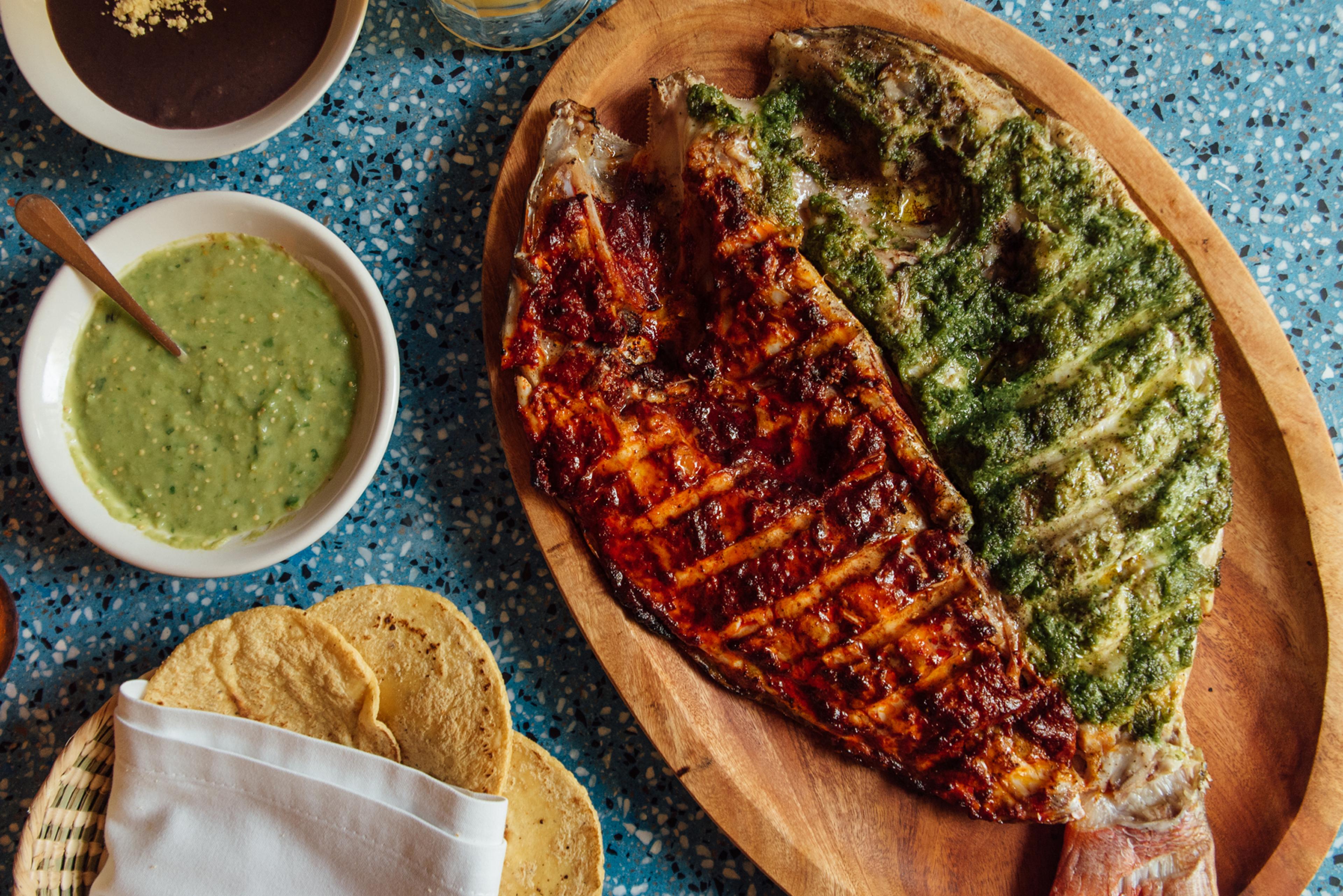
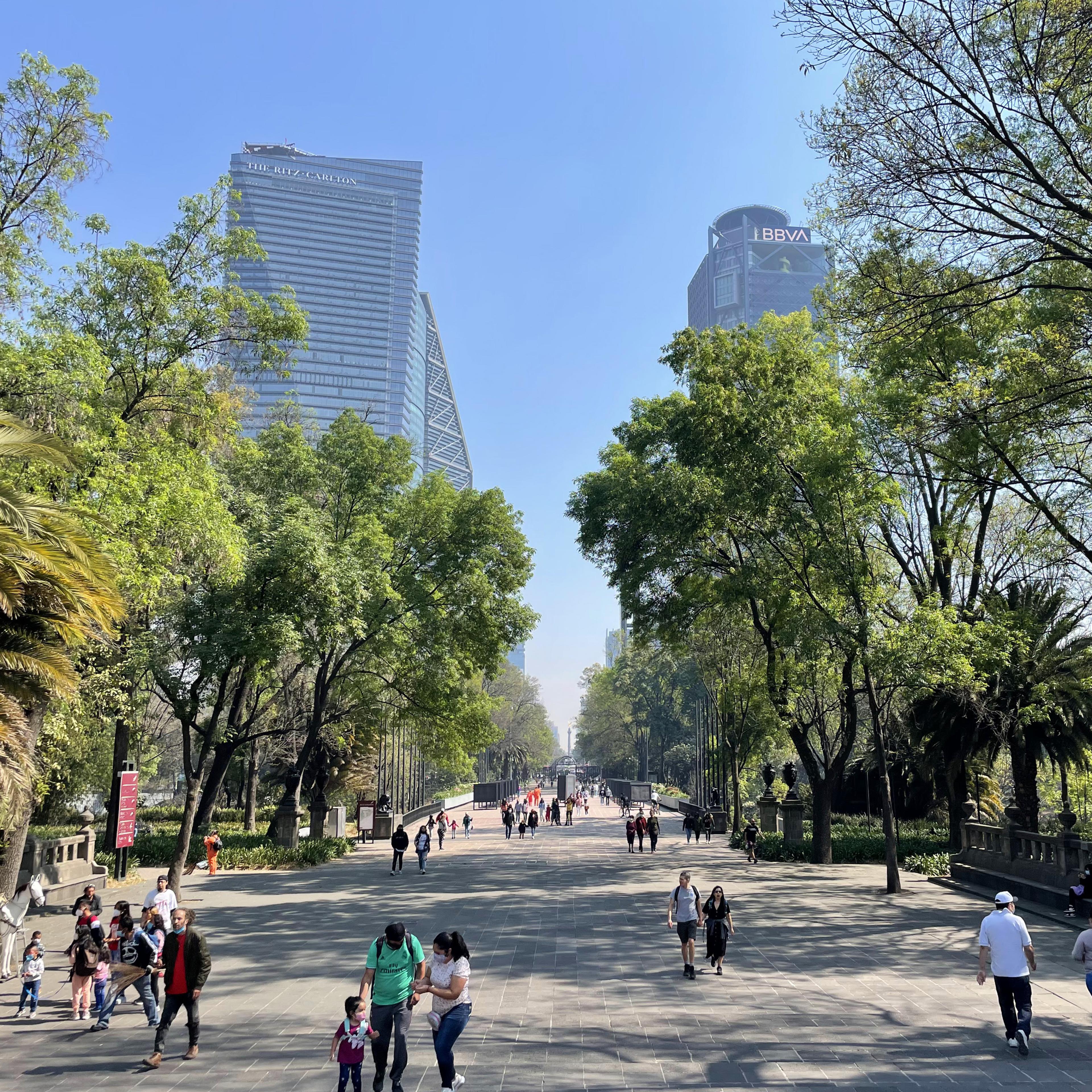
While Mexico City is deeply rooted in tradition, it's also a capital of cool. Use this cheat sheet to discover the hotels, restaurants, shops and cultural highlights that are essential for any Indagare itinerary in CDMX.

An Art Lover’s Guide to Mexico City
Indagare ambassador and art advisor and consultant Andrea Feldman Falcione shares her guide to Mexico City for art lovers.

Plan Your Trip With Us
We only feature hotels that we can vouch for first-hand. At many of them, Indagare members receive special amenities.
Get in touch